
Thinking about function, or where the change took place.
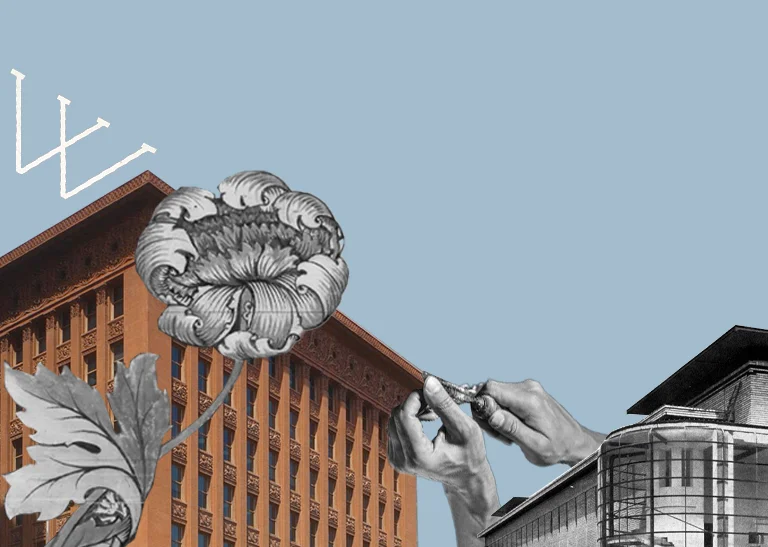
To introduce the atmosphere of the turn of the 19th and 20th centuries, we should begin with the general confusion and disorientation that prevailed in the world of art. On the one hand, there was an optimistic belief in the coming “modern” age, with its vast promises of technological progress; on the other, artists, massively rejecting academicism and the old order of their existence, were swept into a wave of radical change in art. The multitude of emerging movements and loudly proclaimed manifestos led to the loss of any coherent language and, consequently, to society’s lack of understanding and the isolation of artists.
Throughout the 19th century, the development of mechanisation caused unease among designers and artists. These attitudes only began to change at the turn of the century, when excitement and fascination took the place of uncertainty and anxiety. This is where two camps of designers emerged, differing in their attitude towards technology.
“Form follows function.” – the famous and significant words of the American architect Louis Sullivan were spoken in 1896. Sullivan saw this statement as an absolute law. For the first time in the history of architecture and design, tradition and the slavish imitation of already established classical forms were challenged, while designers’ attention was directed towards the function and purpose of an object.
A form developed through an investigative and meticulous approach to the problem of function would be aesthetically pleasing.

A few years later, the Austrian architect Adolf Loos approached the issue even more radically, openly calling ornament a crime. His concept became important in defining the key principles of the Bauhaus and also provided a foundation for the development of modernism. Loos demonstrated the pointlessness of ornament, which had no place in contemporary society. The architect saw modern beauty in the nobility of pure materials; moreover, he focused on the loss of a piece of furniture’s value when it went out of fashion, while ornament was, after all, an element closely associated with a particular period. This approach to design – thinking about an aesthetic that is timeless and resistant to fashion and style – was extremely important in the transformation of design thinking.
In England, meanwhile, the Arts and Crafts Movement was led by William Morris. Morris’s ideal was the Gothic cathedral, in which he saw a synthesis of the most important elements of creative work worth fighting for. He dreamed of a return to a golden age when art, morality, politics and religion formed a unity – an age of great craft guilds. The Movement’s activities were a response to the situation of artists and one of the first attempts to improve it; however, Morris’s aversion to and lack of understanding of the machine doomed the undertaking to failure. Despite this, Morris and his ideas dominated the 19th century and inspired a host of designers.

What was happening in England through the work of William Morris had a tremendous influence on the German architect and architectural theorist Hermann Muthesius. In 1907, he founded the Deutscher Werkbund in Munich – an organisation bringing together architects, artists and engineers. Muthesius was convinced that industry and craftsmanship could be successfully united. And so it came to pass. The Werkbund enabled a successful synthesis of the machine age and Morris’s ideas about craftsmanship. The designs featured in the Werkbund yearbooks demonstrated the quality and calibre of German design and architecture of the period. The first exhibition challenge intended to test the Werkbund’s achievements was held in Cologne in 1914. The most recognisable structure was the glass industry pavilion designed by Bruno Taut, with a prismatic dome constructed from coloured glass and concrete.
Walter Gropius was one of the youngest members of the Werkbund. Thanks to this young and outstanding creator, events of immense importance to the world of design began in Germany. More on this in the next part of the article.
Article by Anna Kuźnik, an interior architect at Studio KU a graduate of the Academy of Fine Arts in Warsaw
Explore our collection of BAUHAUS-style furniture
